As COP31 heads into its final days in Antalya, electrification is right at the centre of the talks. Türkiye launched its 35x35 pledge as the summit opened, to raise electricity's share of the world's final energy use from around 23% today to 35% by 2035. It's voluntary, but 75 countries and 94 organisations now back it, according to the COP31 presidency, and the EU formally signed up on 17 November.
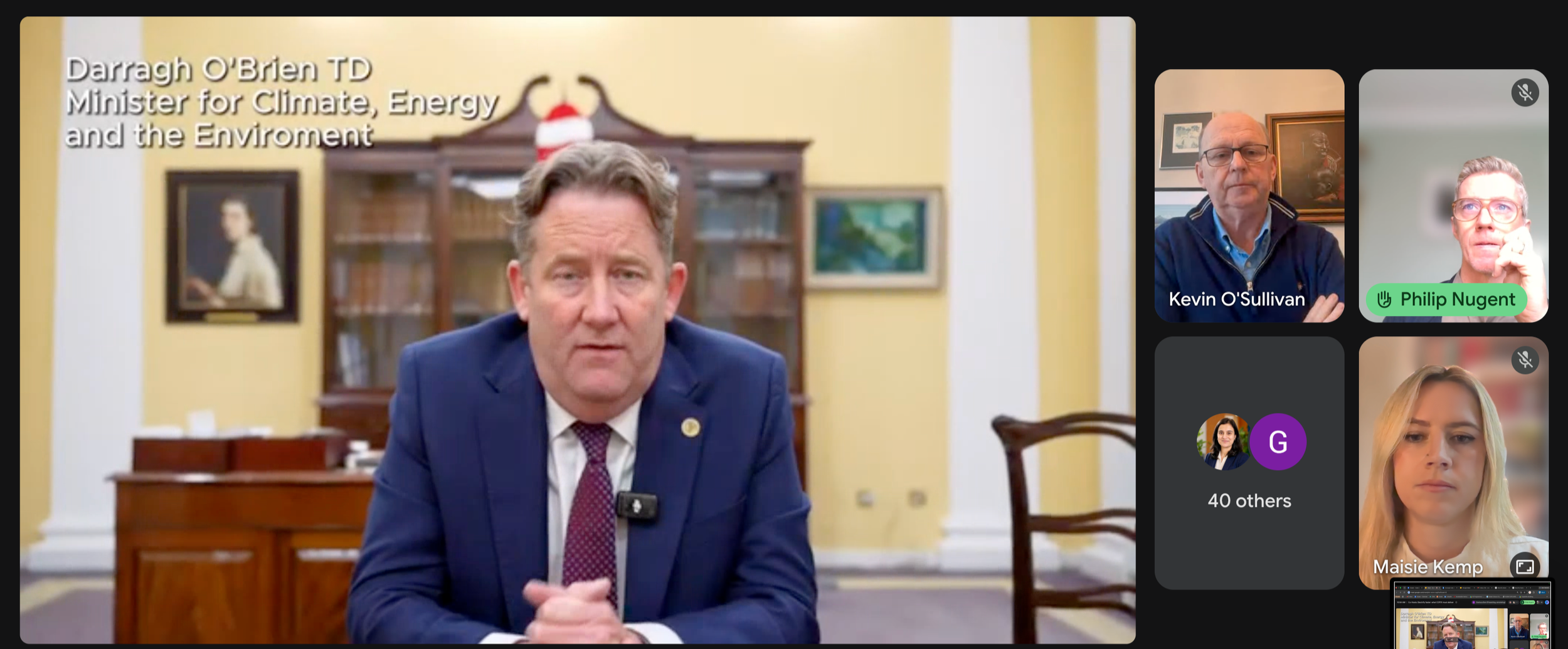
Just days before COP31 kicked off in Antalya, we brought four members of the Subak community together to co-host a webinar to kick-start these discussions: Trifecta Energy, Ember, EnergyTag and TransitionZero. We were fortunate to be joined by former Irish minister Eamon Ryan, with a recorded message from Ireland's Minister for Climate, Energy and the Environment, Darragh O'Brien TD.
What we heard from every speaker is that electrification is already well underway. Economics, technology and energy security are pushing it forward as much as climate policy is. So COP31 doesn't need to make the case, instead, it needs to help things move faster, by backing targets with proper plans, tackling the prices holding industry back, and making sure every country can benefit fairly.
Tests for COP31: the state of play
Kevin O'Sullivan, former Editor of The Irish Times, moderated and kicked us off by introducing E3G's three tests for COP31. First, can it give a credible response to the science, including the proposed goal of 35% electrification by 2035? Second, can climate finance move from promises to delivery, including tripling adaptation finance by 2035 and making finance easier to access for small island developing states and least developed countries? And third, can the process show it's ready for the implementation era, on the way to the second global stocktake in 2028? For Kevin, electrification was outlined as arguably the quickest route to affordability, stable prices and energy security.
Photo by IISD/ENB - Mike Muzurakis
The evidence: Dave Jones, Ember
Dave set the scene: electrification is the single biggest topic at COP this year, with more than 100 events planned across the two weeks. He was upfront that 35 by 35 is very ambitious. It means quadrupling the pace of electrification we've seen over the last few decades, in every sector and region. Dave’s key message was that we don't have to wait for perfectly clean grids. 99% of people already live somewhere where an EV beats a petrol car on emissions, and 95% live somewhere where a heat pump beats gas. And last year, wind and solar met all of the growth in the world's electricity demand.
Using the IEA's electrification report from September, Dave pointed to three big wins. Electrification already makes economic sense at today's prices and cuts household energy bills by around 15%. It cuts fossil fuel import bills by $400 billion a year. And it's central to cutting emissions. In other words, governments are pushing against an open door, and the momentum is there already.
The plan: Ajita Mishra, TransitionZero
Ajita focused on what makes that ambition deliverable. If a business wants to electrify, it needs the clean power, the grid connection and the investment to arrive at the same time, and that only happens when governments have a plan that links those decisions together. Open, participatory energy modelling, like TransitionZero's Scenario Builder, gives policymakers, utilities, investors and communities a shared place to look at the options and challenge the assumptions.
A good plan, she said, starts with local evidence on where and when demand will grow. It looks at generation, grids, storage and flexibility together, and it's clear about what comes first, who's responsible and how it gets paid for. And it needs people behind it: investing in skills, data and planning capability matters as much as investing in infrastructure. Her message for COP31 was to back electrification targets with clear clean power investment plans, and the capacity to deliver them.
The fix: Killian Daly, EnergyTag
Killian focused on the biggest barrier in Europe: the price of electricity. He quoted the IEA's Fatih Birol, who has said that "the biggest problem I have for European electrification is the affordability of electricity prices." On the morning of the webinar, gas in Europe cost €87 per megawatt hour, ten times the €8.7 it cost in the US. Until power prices are decoupled from gas, European industry can't compete or feel secure.
Fixing that is about timing as well as building more solar, with flexibility and batteries that push gas out of the evening peaks. Killian was wary of schemes that simply cover industry's gas bills, which give short-term relief but leave the underlying problem in place. Industry needs affordable, long-term clean power contracts that give price certainty for the life of an investment, and IEA analysis shows that wind, solar and batteries together are already competitive for round-the-clock demand in the US, Europe and China. EnergyTag's idea is an "Electron Bank", which would use Emissions Trading Scheme revenues to back those contracts, so public money goes into the system we want to build instead of today's gas bills.
The ask: Lesley O'Connor, Trifecta Energy
Lesley’s climate career started after a frustrating COP15 in Copenhagen. Now, she said, the economics, physics, geopolitics and electrotech have all come together, and we're at a turning point. The catch is that our energy systems were designed for an analogue, thermal world, and small tweaks won't get us where we need to be. For Lesley, a meaningful COP is one where the target comes with real delivery attached.
She shared examples from Trifecta Ireland's work. Ireland has some of the highest electricity prices in the world, and around half of what consumers pay goes on system charges. Trifecta has seen heat pumps and EV chargers left uninstalled because they couldn't get a grid connection, electric boilers sitting idle because electricity can cost three times as much as gas, and grant-funded heat pumps that are not enabled to provide system benefits through flexibility, instead default to operating flat 24/7.
Lesley set out four non-negotiables for COP31: electrification has to be clean, affordable, fair and accountable. On fairness, she quoted the IEA's Brian Motherway, who says the transition "must be fair and seen to be fair", because that's what builds public trust and stability. On accountability, she wants clear ownership of outcomes from start to finish, instead of the fragmented governance we have today.
The response: Eamon Ryan and Darragh O'Brien TD
Eamon Ryan, former Irish Minister for Climate and Energy and a past lead negotiator at COPs for Ireland and the EU, said politics is now what matters most. The science is alarming and the economics add up, but we still need to win people over. He called renewable power, and the flexibility that comes with it, "the peace project of our time", because it protects us from climate breakdown and from wars over fossil fuels.
In a recorded message, Minister Darragh O'Brien TD confirmed that Ireland is leading the negotiations for the EU at COP31, alongside the European Commission. Ireland will soon publish its own Electrification Action Plan, and after COP it will co-host TAP 2 with Tuvalu, continuing the coalition's work on moving away from fossil fuels. He wants this to be an implementation COP that delivers on what's already been agreed. He also stressed that electrification brings economic benefits as well as climate ones for the Global South, small island developing states and least developed countries, as long as they can access climate finance.
What we'll be watching as COP31 wraps up
The big question now is how much of this makes it into the final deal. 35x35 has made it in the first draft of the main COP31 decision, but there are tensions around the detail - sectoral targets and specific wording under scrutiny. Meanwhile, Darragh O'Brien is in Antalya co-leading the EU's negotiations, and Ireland is set to publish its national electrification strategy during the summit. Here's what we'll be watching:
Electrification is already happening. 75 countries are on board. How does this pledge turn into national action?
Delivery is the test. Targets need plans, people and investment behind them.
Fix the price. Breaking the link between electricity and gas unlocks industry.
Make it fair. Affordability at home and finance for the Global South.
COP31 closes on Friday 20 November. Whatever ends up in the final text, the message from our webinar was clear: the momentum is already there, and now it's about turning pledges into plans that countries can actually deliver, with fairness, affordability, accountability, and clean energy at the core.
Thank you to our co-hosts for contributions to this blog and their input to the webinar.